
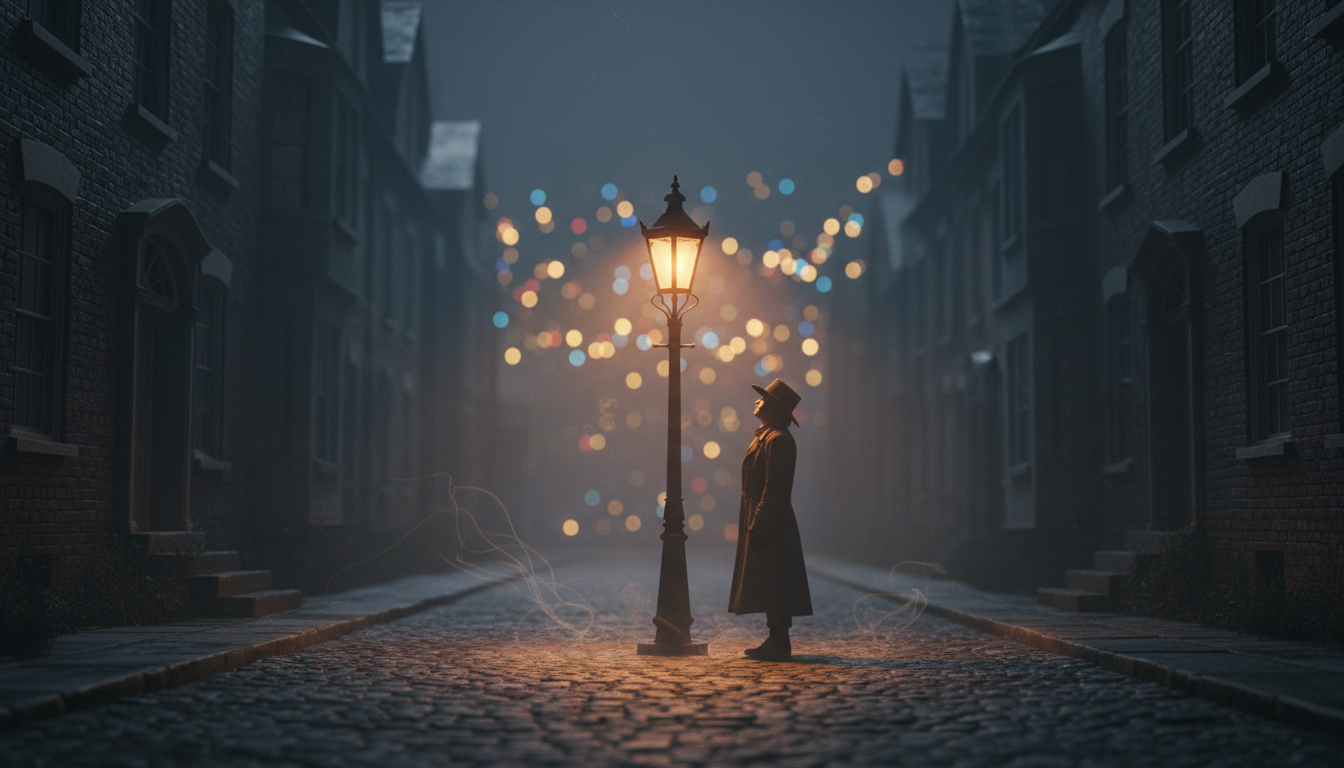
On the corner of Hemlock and Fourth, in a neighborhood that typically sleeps before the ten o’clock news finishes, stands a lamp post that defies the logic of the city grid. It is an older model, its iron neck curved like a question mark, the paint layered thick from decades of municipal maintenance. To the casual observer during the day, it is unremarkable, blending into the background of oak trees and brick row houses. But the locals know—or at least, the ones who have trouble sleeping know—that this specific light does not follow the schedule of the sun or the timer set by the electric company.
It has no photocell that detects dusk. It does not respond to motion, flickering to life merely because a fox darts across the pavement. This streetlight has a far more delicate, far more specific trigger. It only illuminates when the person walking beneath it feels truly, profoundly alone.
The phenomenon went unnoticed for years, largely because loneliness is a quiet thing, often kept indoors behind drawn curtains. But eventually, patterns emerged. The light would remain stubbornly dark for happy couples strolling hand-in-hand after a dinner date, forcing them to navigate the patch of sidewalk by the moonlight filtering through the branches. It stayed black for the loud groups of teenagers spilling out of cars, their laughter filling the air so completely that there was no room for silence. But for the widow walking her dog at 2:00 AM, or the young man who had just moved to the city and knew no one, the light offered a sudden, warm amber greeting.
Arthur Pendeleton was the first to document it, though he never wrote it down. Arthur was seventy-two, a man whose life had become a series of quiet rooms and silent meals after his wife, Martha, passed. He took to walking at night because the house felt too large when the sun went down. The silence of the furniture seemed to press against his ears.
The first time it happened, Arthur was trudging toward the corner, his hands deep in his coat pockets, thinking about the empty chair at his breakfast table. The street was pitch black. He braced himself to squint through the darkness, but the moment his foot hit the cracked pavement beneath the lamp, a soft hum vibrated in the air. A second later, a pool of golden light washed over him.
It wasn’t the harsh, buzzing white LED glare that the city had installed on the main boulevards. This light was rich and honey-colored, reminiscent of old incandescent bulbs or even candlelight. It felt physical, like a warm hand resting gently on a shoulder. Arthur stopped, startled. He looked up at the glass globe, waiting for it to flicker or buzz, but it remained steady, wrapping him in a silent embrace. He stood there for a long time, the only illuminated figure on the block, and for the first time in months, the crushing weight in his chest lightened. He felt seen.
Over the next few weeks, Arthur tested his theory. One evening, he walked past the light while on the phone with his daughter, laughing about a story she was telling him regarding her toddler. The street remained dark. Another night, he walked with a neighbor, Mr. Henderson, discussing the local zoning laws. The light slept. But on the nights when the phone didn’t ring, when the silence of the house drove him out into the cool air, the light was always there, waiting for him.
It became a companion. Arthur began to look forward to the walk to Hemlock and Fourth. He would stand under the glow, breathing in the night air, feeling a strange communion with the filament above. It was a secret shared between him and the infrastructure of the town.
Then came the Tuesday in November when the wind was stripping the last of the leaves from the oaks. Arthur was approaching the corner, feeling particularly low; the holidays were approaching, and the nostalgia was sharp enough to cut. As he neared the lamp post, he saw someone else was already there.
A girl, perhaps no older than twenty, was sitting on the low brick wall directly beneath the unlit lamp. She was hugging her knees to her chest, her head bowed. She was invisible to the cars passing a block away, swallowed by the shadows. Arthur hesitated. He didn’t want to intrude, but he also worried about someone sitting alone in the dark.
As he took a step closer, wondering if he should turn back, the girl let out a shaky breath that sounded like a sob. Instantly, the light above her hummed to life. The golden circle bloomed around her, catching the tears on her cheeks and the shimmer of her hair. She looked up, startled, wiping her eyes quickly.
Arthur stood at the edge of the light. The lamp was shining for her, not him. It was recognizing a grief that was fresh and sharp, different from his own dull ache, but born of the same family. The magic of the streetlamp was not just that it lit up, but that it identified the need for light.
“It’s a bit brighter than you expect, isn’t it?” Arthur said softly, stepping just enough into the glow so as not to frighten her.
The girl jumped slightly, then relaxed when she saw his kind, lined face and his thick wool coat. “I didn’t think it worked,” she whispered. “I’ve been sitting here for ten minutes in the dark.”
“It works,” Arthur said, leaning against the post, though he kept a respectful distance. “It just has… specific criteria.”
“I just needed to be out of my apartment,” she admitted, her voice trembling. “I moved here for school, and I don’t… I don’t fit in yet. I miss my mom.”
Arthur nodded, understanding the language of missing someone. “My name is Arthur. I live three blocks down. And I miss my wife, Martha. She would have known exactly what to say to you right now, but you’re stuck with me.”
The girl managed a weak, watery smile. “I’m Sarah.”
“Well, Sarah,” Arthur said. “You picked a good spot. This is the best light in the city for thinking.”
They stood there for a moment, two strangers sharing a pool of amber light in a sleeping city. Arthur asked her about her studies, and she asked him about Martha. The conversation was halting at first, then easier, flowing like water finding a new channel. Sarah spoke of her fears of failing, and Arthur spoke of the garden he was trying to keep alive on his own.
As they talked, the air around them seemed to change. The sharp bite of the wind lessened, replaced by the warmth of connection. Sarah laughed at a joke Arthur made about his cat’s disdain for rain. Arthur smiled, a genuine expression that reached his eyes.
And then, without a sound, the light went out.
They were plunged back into the darkness of the street, illuminated only by the faint starlight and the distant glow of the city center. Sarah looked up, confused. “Why did it turn off?”
Arthur looked up at the dark iron curve of the lamp post. He understood immediately. The mechanism hadn’t failed. It had succeeded perfectly.
“I suppose,” Arthur said, his voice thick with a new kind of hope, “it decided we didn’t need it anymore.”
Sarah looked at him, and then she understood too. The solitude had broken. The heavy, suffocating blanket of loneliness had been lifted, not by the bulb, but by the person standing next to her. The light was only a signal flare, a beacon designed to hold space until help arrived. And help had arrived in the form of a conversation.
“I can walk you back to your building, if you like,” Arthur offered. “It’s on my way.”
“I’d like that,” Sarah said.
They walked away from the corner of Hemlock and Fourth, chatting about the best places to get coffee in the neighborhood. Behind them, the streetlight stood tall and dark, a silent sentinel returning to its slumber, waiting for the next person who needed to be reminded that even in the deepest night, there is a light that watches over them, waiting for the moment they are ready to be found.