
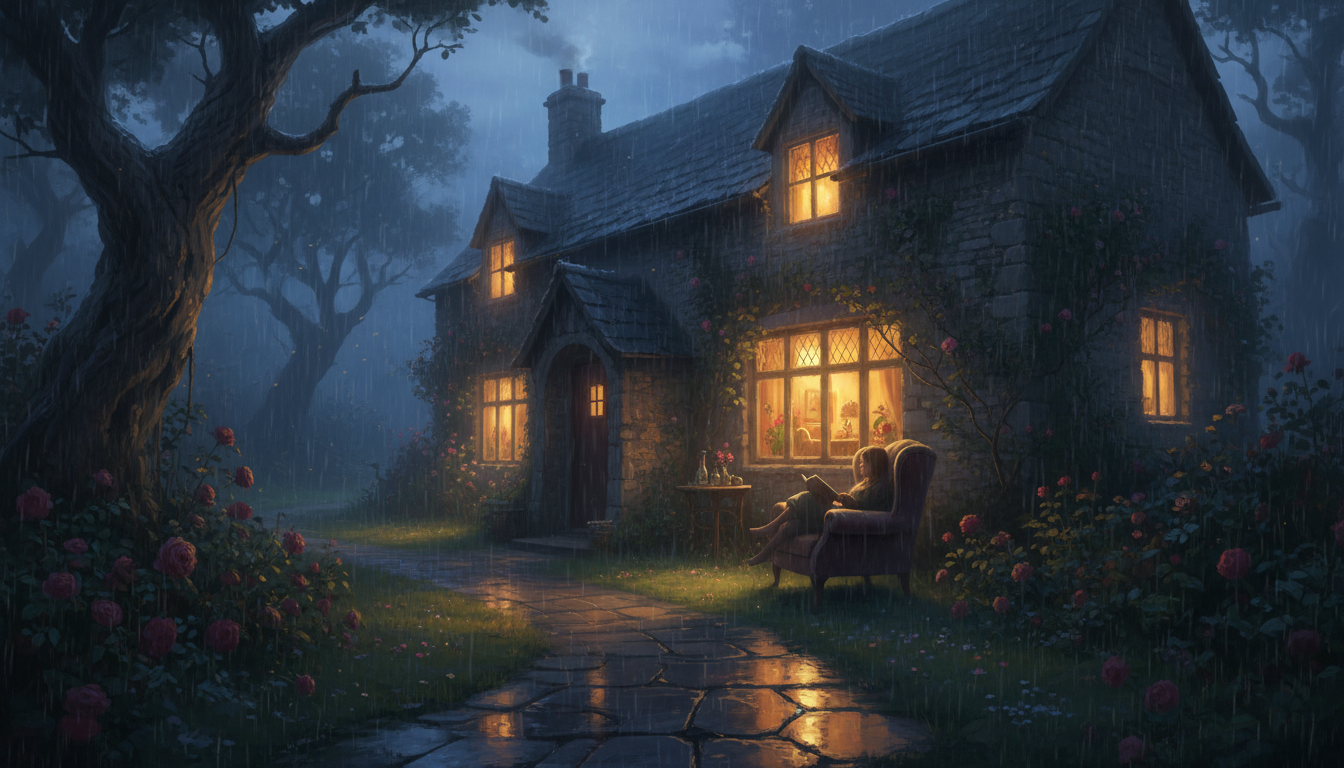
The key turned in the lock with a heavy, satisfying clunk, the sound of old brass meeting older iron. Elias pushed the door open and stepped into the hallway. It was midday, yet the interior of the cottage was swallowed in a dusky gloom, as if the air itself held a tint of indigo. He dropped his duffel bag on the floorboards, kicking up a small plume of dust that danced in the single beam of sunlight cutting through the mail slot. Instinctively, he reached for the light switch on the wall.
Click. Nothing. Click. Still nothing.
Elias sighed, the sound echoing slightly in the empty space. The landlord, a woman with eyes the color of rainwater, had mentioned the electricity was temperamental. She hadn’t said it was broken, merely that the house had “preferences.” At the time, Elias had been too desperate for a lease to ask for clarification. He had spent the last three years moving between sublets and short-term rentals, never unpacking more than a single suitcase, always keeping one foot out the door. He was tired of running, even if he wasn’t quite sure what he was running from.
He walked deeper into the house. The kitchen was shadowed, the living room dim. The windows were large, but the glass seemed to hold a smoky opacity, filtering the bright afternoon sun into a perpetual twilight. He checked the fuse box in the pantry. Every switch was flipped to the ‘ON’ position. He unscrewed a bulb from the dining room chandelier and shook it; the filament was intact. Mechanically, he went through the motions of troubleshooting, a habit born of a life spent fixing temporary problems in temporary places.
By evening, the cottage was pitch black. Elias sat on the floor of the living room, eating a sandwich by the light of a camping lantern he kept in his car. The silence was absolute. There was no hum of a refrigerator, no ticking of a clock, no distant traffic. It was just him and the house, sitting in the dark.
The first week passed in a similar fashion. Elias treated the cottage like a campsite. He slept in a sleeping bag atop the mattress because he hadn’t bothered to buy sheets. He ate cold food because the electric stove refused to heat up. He showered at the local gym because the water heater was stone cold. He spent his evenings reading paperback novels by flashlight, his shadow looming large and distorted against the peeling wallpaper.
He assumed the wiring was shot. He called an electrician, a local man named Thomas who arrived with a tool belt and a skeptical expression. Thomas spent two hours testing outlets, checking the breaker, and tracing lines. He found voltage everywhere. The power was there, humming in the walls, waiting. It just wasn’t manifesting.
Thomas packed up his tools, looking unsettled. He told Elias that technically, everything should be blazing bright. He refused to charge for the visit and left quickly, glancing back at the dark windows as he drove away.
Elias stood in the hallway, frustration bubbling in his chest. He shouted into the silence. He demanded the lights to work. He pleaded with the house. The house did not answer. The shadows merely deepened, cool and indifferent.
That night, a storm rolled in off the coast. Rain lashed against the smoky glass, and the wind howled around the eaves. Elias lay in his sleeping bag, shivering. The cold was seeping into his bones. For the first time in years, the urge to leave, to pack his bag and drive until the tank ran dry, was overwhelmed by a different feeling. Exhaustion. He was simply too tired to leave.
He sat up and wrapped the sleeping bag around his shoulders. He walked to the window and pressed his hand against the cold glass. He looked out at the storm, at the chaotic thrashing of the trees. He realized he didn’t want to be out there. He didn’t want to be anywhere else. He just wanted to be warm.
He turned back to the room. It was barely visible, a cavern of shapes and greys. He navigated to the corner where his few boxes sat, unopened. He knelt and cut the tape on the largest one. Inside were the things he usually left in storage. A thick wool blanket knitted by his grandmother. A set of ceramic mugs he had bought at a market five years ago. A framed photograph of a dog he had loved and lost. A stack of books that smelled like vanilla and old paper.
Slowly, deliberately, Elias began to unpack. He wasn’t setting up a camp anymore. He was making a bed. He spread the wool blanket over the mattress, smoothing out the wrinkles. He took the ceramic mugs to the kitchen and placed them in the cabinet, organizing them by color. He set the photograph on the mantelpiece.
He worked by the dim beam of his flashlight, but his movements changed. He stopped rushing. He stopped thinking about the deposit or the lease terms. He thought about how the rug looked against the floorboards. He thought about where his books would look best.
He found an old cast-iron kettle in the back of a cupboard. He filled it with water and set it on the cold stove, mostly out of habit, or perhaps out of a stubborn defiance. He placed a tea bag in one of his ceramic mugs. Then, he sat in the armchair in the living room. It was a worn, velvet thing that had come with the house. He leaned his head back and closed his eyes.
He let out a breath he felt he had been holding for three years. His shoulders dropped. The tension in his jaw released. He listened to the rain and accepted that he was here. He wasn’t going anywhere tomorrow. He wasn’t looking for the next place. This was it. The dust, the gloom, the silence. He accepted it all.
“I’m home,” he whispered into the dark. It wasn’t a declaration of ownership; it was an admission of surrender.
A soft click sounded from the kitchen.
Elias opened his eyes. A faint, orange glow was emanating from the hallway. He stood up, his heart hammering a slow, steady rhythm. He walked to the kitchen doorway. The red indicator light on the stove was on. A low rumble began as the water in the kettle started to heat.
He turned back to the living room. The floor lamp in the corner flickered once, twice, and then bloomed into a warm, steady gold. It wasn’t a harsh, electric white, but a soft, honeyed light that seemed to caress the walls.
One by one, the house woke up. The sconces in the hallway hummed to life, casting intricate shadows through their glass shades. The chandelier in the dining room glowed with a low, romantic brilliance. Even the fire in the hearth, which Elias hadn’t touched, sparked to life, the dry logs catching a flame that seemed to materialize from the air itself.
The opacity in the windows cleared. The glass became transparent, reflecting the warm interior against the dark backdrop of the storm. The house felt different. The air was no longer cold and indigo; it was toasted and golden. The smell of dust vanished, replaced by the scent of woodsmoke and brewing tea.
Elias walked to the stove as the kettle began to whistle—a cheerful, grounding sound. He poured the water into his mug and wrapped his hands around the ceramic, feeling the heat seep into his palms. He took a sip and looked around.
The house wasn’t just lit; it was alive. It felt as though the structure had been holding its breath, waiting for him to exhale his own. It couldn’t provide warmth to a transient ghost. It needed a resident. It needed someone to commit to the space before the space committed to them.
He carried his tea back to the velvet armchair. The light from the floor lamp fell perfectly over his shoulder, illuminating the book he had placed on the side table. He opened the cover. The pages were crisp and bright under the glow. Outside, the storm raged on, but inside, everything was steady. Elias turned the page, and for the first time in a long time, he didn’t wonder where he would be next month. He just read, bathed in the light of a house that finally knew him.