
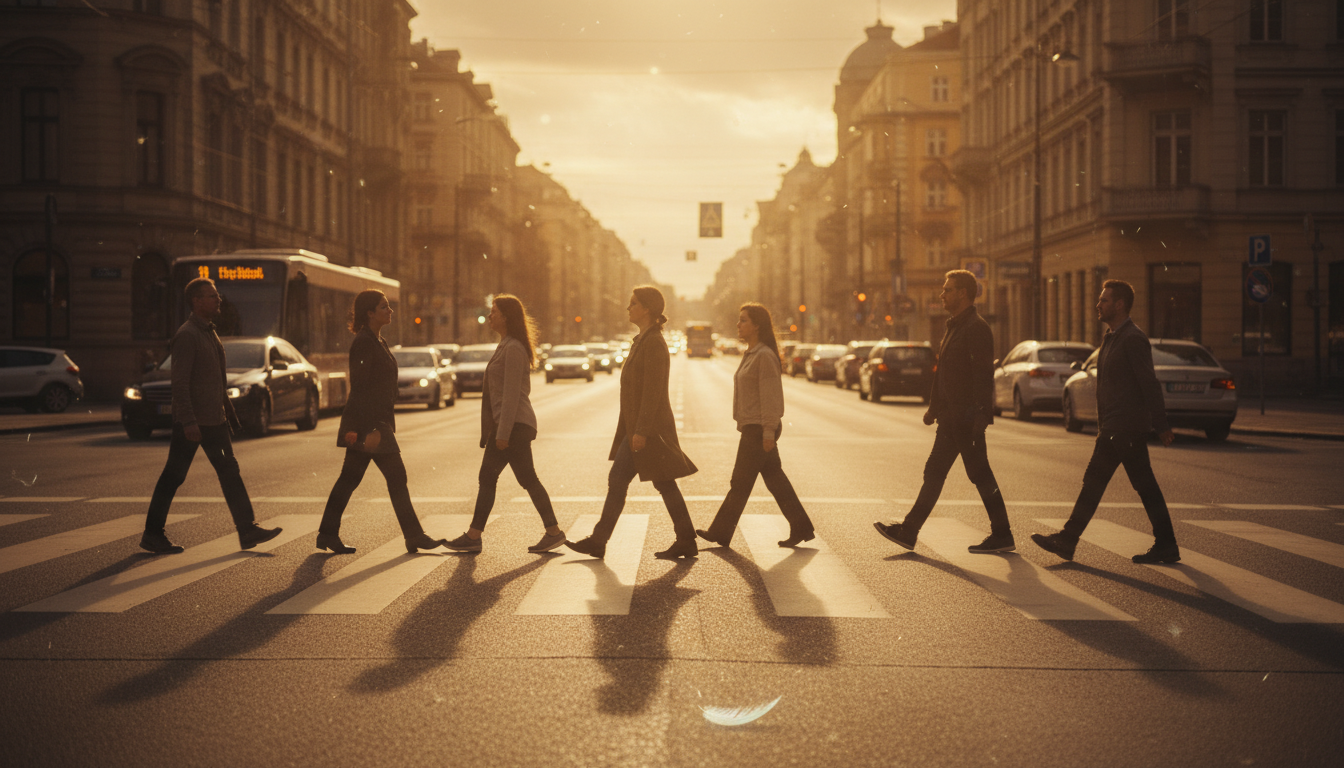
In the heart of the city, where the architecture is all steel ribs and glass skin, the rhythm of life is usually dictated by the aggressive ticking of a metronome set to allegro. People do not walk; they march. They check wristwatches and smartphones with the twitchy desperation of those running late for their own lives. Cabs blur into yellow streaks, and the traffic lights change with a snapping authority that demands immediate obedience. Everything moves forward, fast and relentless.
Everything, that is, except for the pedestrian crossing at the intersection of Hawthorn and Raines.
To the naked eye, there is nothing remarkable about this particular patch of asphalt. The white stripes are faded, worn down by the tires of a thousand delivery trucks. The curb is slightly chipped. The button you press to request the walk signal is sticky and scuffed, just like every other button in the city. But the locals know, even if they never speak of it aloud, that the physics of the world behave differently here.
When the little green figure illuminates, signaling permission to cross, something shifts in the air. It isn’t a scent, though some claim it smells faintly of old books or rain on hot pavement. It isn’t a sound, though the roar of the surrounding city seems to dampen, wrapped in invisible cotton wool. It is a feeling—a gentle, atmospheric pressure that settles on the shoulders of anyone who steps off the curb.
At Hawthorn and Raines, you cannot rush. It is not that your legs become heavy or the ground becomes sticky. It is simply that the urge to hurry evaporates. The adrenaline that fuels the city dweller dissolves, replaced by a strange, bewildered calm. You lift a foot to sprint, but you place it down with the deliberation of a monk in a walking meditation.
The Man Who Ran
Elias was a man who prided himself on efficiency. He measured his days in billable hours and his commute in minutes saved. He knew which subway car opened directly in front of the exit turnstile. He knew how to weave through tourists without breaking stride. To Elias, walking was not an activity; it was transportation.
He encountered the crossing on a Tuesday in late October. The wind was biting, cutting through coats and whipping scarves into faces. Elias was late for a meeting that could define his quarter. His chest was tight with that familiar, acidic stress that had become his baseline state of being. He tapped his foot impatiently as the traffic rushed by, glaring at the red hand across the street.
The light changed. The white figure appeared.
Elias launched himself off the curb, intent on power-walking the forty feet to the other side. But the moment his Oxford shoe touched the first white stripe, the knot in his chest loosened. It happened so suddenly it felt physical, as if a hand had reached inside his ribcage and untangled a wire.
He meant to check his watch, but his arm didn’t rise. Instead, his eyes drifted upward. He noticed the way the afternoon sun caught the upper windows of the skyscraper ahead, turning the glass into sheets of hammered gold. He had passed this building a thousand times and never seen the gold. He took another step, slower this time.
Around him, other people were drifting. A courier on a bicycle, usually the sworn enemy of the pedestrian, was gliding alongside them, one foot dragging lazily on the ground, his face turned toward the sky. A mother holding a toddler’s hand wasn’t pulling the child along; she was standing still, watching the boy stomp on a dry leaf, a soft smile playing on her lips. They were in the middle of a four-lane avenue, yet no one honked. The cars waiting at the line seemed to be idling in a lower register, the drivers leaning back in their seats, staring blankly, peacefully, through their windshields.
The Pause Between Notes
There is a theory among the elderly residents of the neighborhood that the crossing sits on a intersection of ley lines, or perhaps a thinning in the fabric of reality where the past bleeds into the present. They say that fifty years ago, a jazz club stood on the corner, a place where time was measured not in seconds, but in beats and rests. They believe the music never really left; it just sank into the concrete.
Elias didn’t know about jazz or ley lines. He only knew that for the first time in ten years, he could hear his own heartbeat. It wasn’t racing. It was steady. Thump-thump. Thump-thump.
Midway across the street, he stopped. In any other part of the city, stopping in the middle of a crosswalk is an act of lunacy, an invitation to be shouted at or run over. Here, it felt like the most natural thing in the world. He took a deep breath. The air tasted cold and clean, devoid of exhaust.
He looked to his left. A young woman was standing there, clutching a portfolio case. She looked terrified, likely heading to an interview or an audition. She caught Elias’s eye. Usually, eye contact in the city is a challenge or a threat. Here, it was an acknowledgment.
Elias didn’t speak, but he smiled. It wasn’t a networking smile or a polite grimace. It was genuine. The woman’s shoulders dropped three inches. She smiled back, a small, fragile thing, but real.
In that suspended moment, Elias remembered his father. Not the illness or the funeral, but a Saturday morning in a park thirty years ago. He remembered the feeling of his small hand engulfed in his father’s large, warm grip. He remembered the patience in his father’s voice saying, “Look, Eli. Just look.”
The memory washed over him, not with the sharp pang of grief, but with the warm weight of gratitude. The crossing had given him a pocket of time, a sanctuary in the middle of the rush, to feel what he had been too busy to feel.
The Release
The red hand began to flash, counting down. Ten. Nine. Eight.
Usually, this countdown induces panic. People scramble, run, push. But at Hawthorn and Raines, the countdown is gentle. It is a suggestion, not a command. The spell began to lift, slowly, like morning mist burning off a river.
Elias took the final few steps toward the curb. As his foot landed on the sidewalk, the sounds of the city rushed back in—the jackhammers, the sirens, the chatter. The weight of his schedule returned, settling back onto his shoulders. But it felt lighter now. Manageable.
He checked his watch. He had been in the crosswalk for perhaps forty-five seconds. It had felt like an hour. It had felt like a vacation.
He turned back to look at the street. The traffic was moving again. The magic was dormant, waiting for the next cycle of the lights. He saw the young woman with the portfolio walking away. She was walking briskly now, back in the rhythm of the city, but her head was held high, and the terror was gone from her posture.
Elias straightened his tie. He was still late. The meeting was still important. The world was still loud and demanding. But as he turned to walk toward his office, he didn’t run. He walked with a long, easy stride, carrying the silence of the crossing with him, a secret reservoir of peace tucked inside his chest.
Some places in the world speed us up, demanding we keep pace with machines. But there are rare, quiet corners where the universe conspires to slow us down, reminding us that the destination is not the only thing that matters. Sometimes, the miracle is just the walk itself.